LEST researchers present flexibility and e-mobility research at EEM26 in Trondheim
What: 22nd International Conference on the European Energy Market (EEM26)
Where: Trondheim, Norway
When: 22 – 24 June 2026
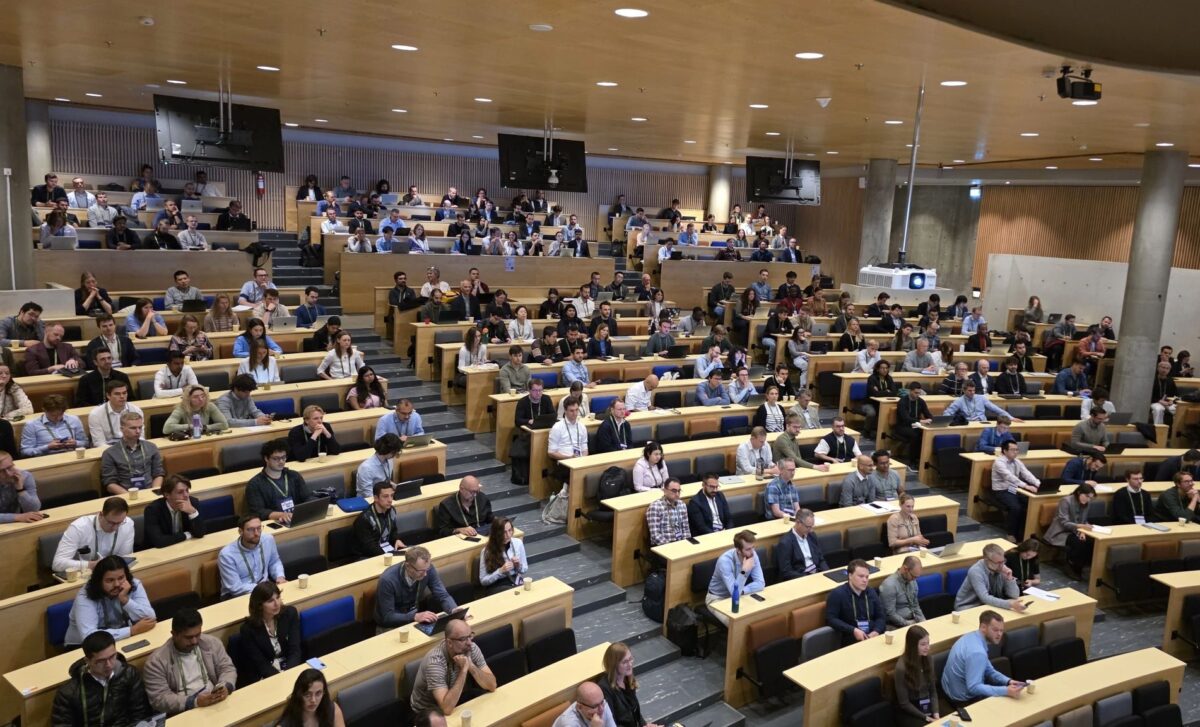
Members of the Laboratory of Energy Policy participated in the 22nd International Conference on the European Energy Market (EEM26), held in Trondheim, Norway, from 22 to 24 June 2026. The conference brought together researchers, industry experts, and policymakers from across Europe, with opening sessions covering the role of hydropower in Northern Europe, large-scale energy storage under variable renewable generation, and the future role of hydrogen in the European energy system.
Flexibility markets and aggregator strategies
Janez Gregor Golja chaired the session on Flexibility Markets and Aggregator Strategies, focused on how to unlock and coordinate flexibility from distributed energy resources. The laboratory contributed two papers to the session.
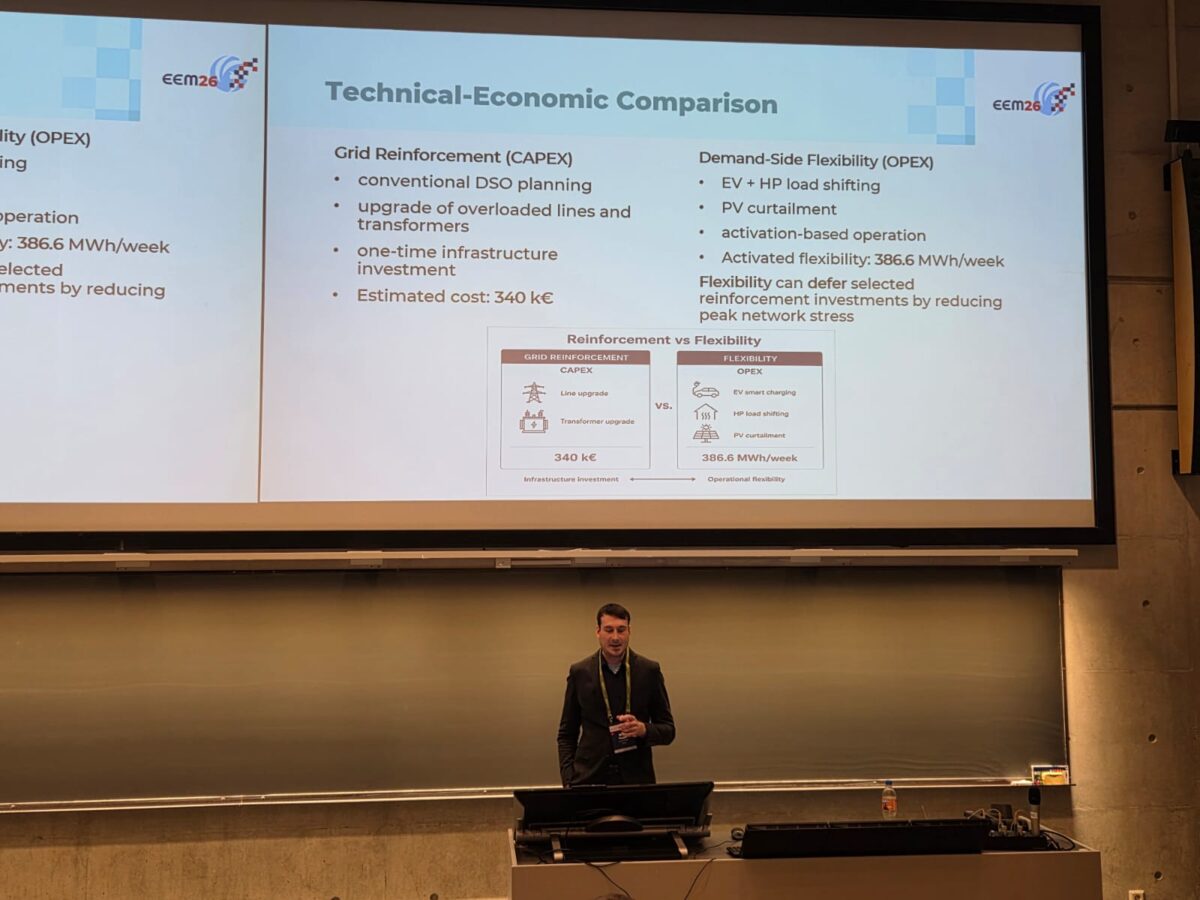
Matej Pečjak presented “Assessing the Value of Flexibility in Low-Voltage Distribution Networks” (Horizon Europe project STREAM). Based on simulations of a real low-voltage network, the paper shows that flexibility from smart EV charging, heat pump load shifting, and solar management can reduce network stress and defer part of the required infrastructure investments, offering a cost-effective complement to conventional grid reinforcement.
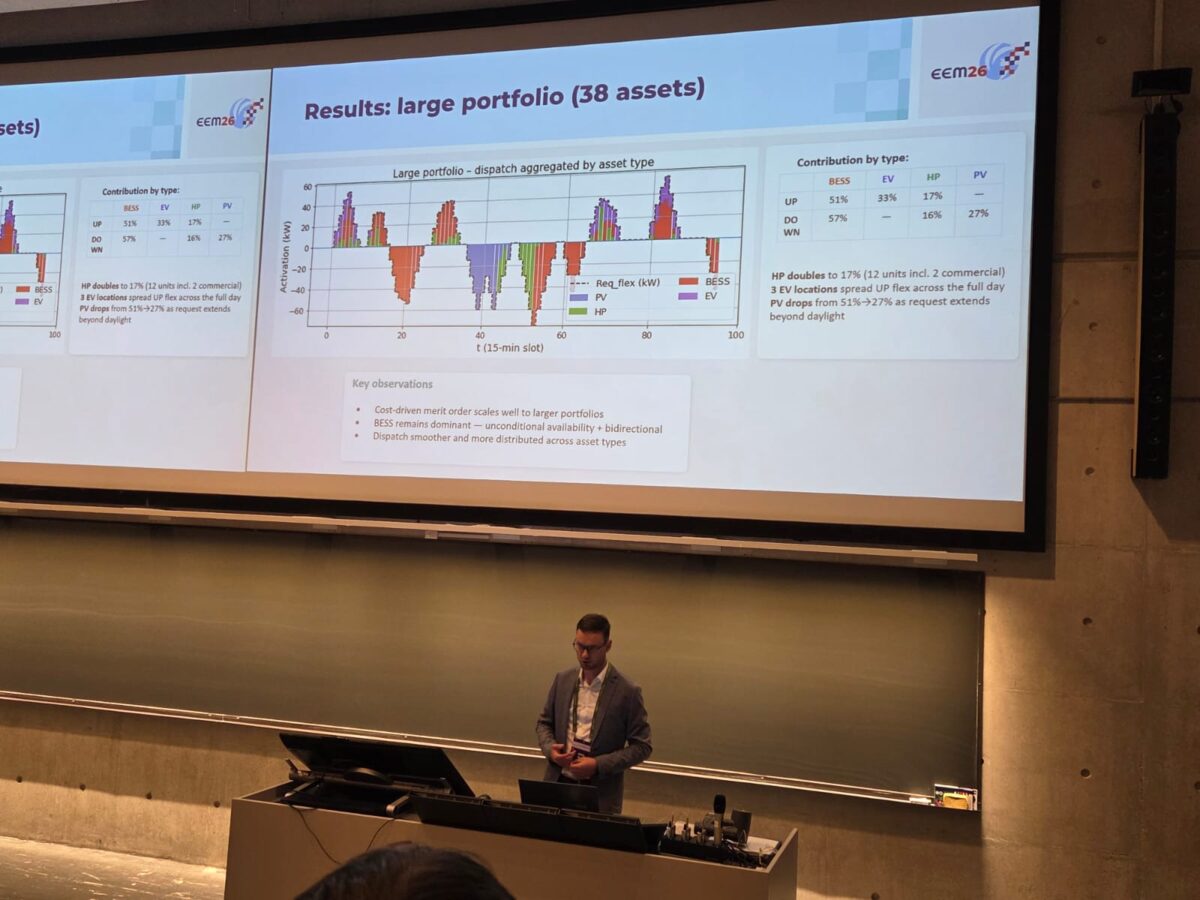
Janez Gregor Golja presented “A Rolling-Horizon Optimal Selection Algorithm for Disaggregating Flexibility in Heterogeneous Asset Portfolios” (Horizon Europe project OPENTUNITY), introducing an advanced algorithm for managing diverse energy assets in increasingly flexible power systems.
E-mobility potential in South-East Europe
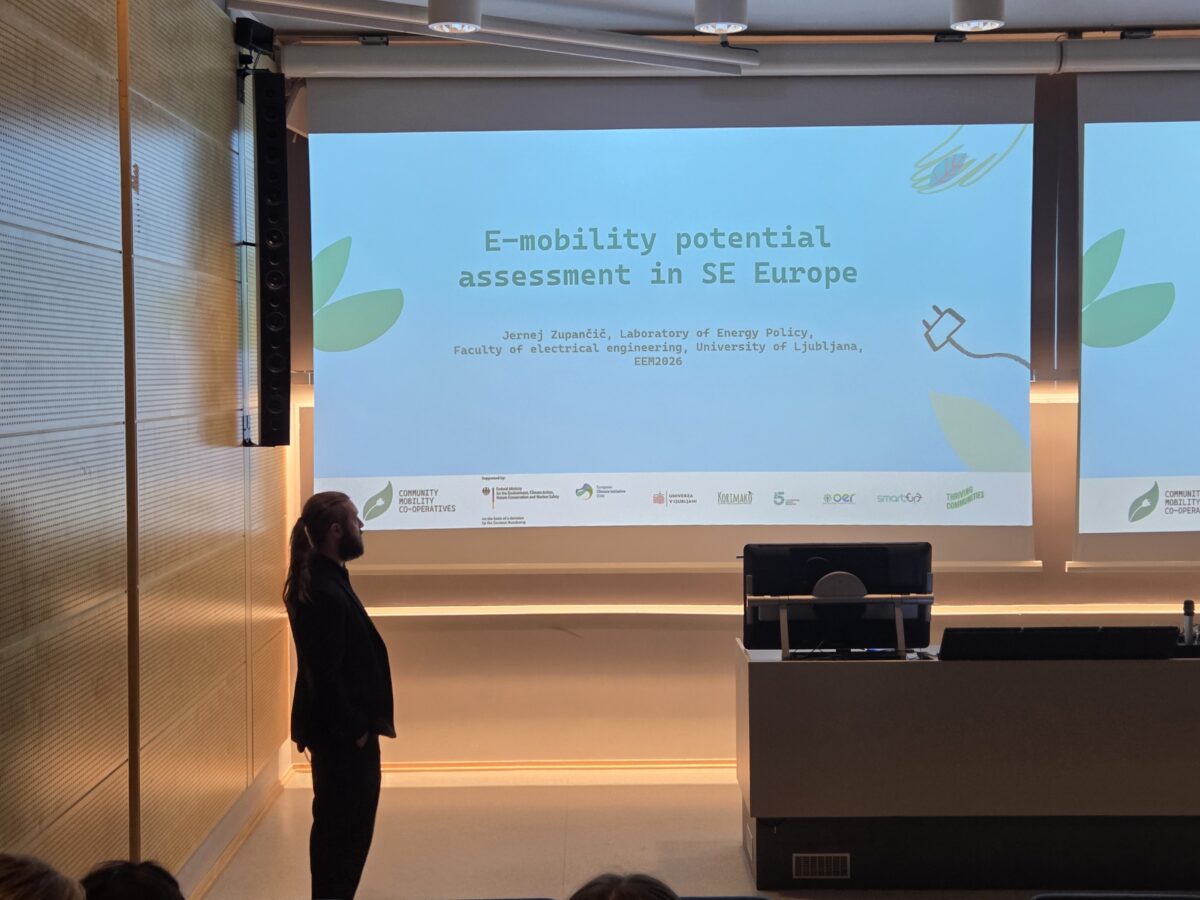
Jernej Zupančič chaired a session on the planning of storage technologies and presented “E-mobility potential assessment in SE Europe”, carried out under the EUKI project Community Mobility Cooperatives. The study assesses electric mobility readiness in Slovenia, Romania, Serbia, and North Macedonia, combining EV adoption trends, charging infrastructure, and national policy frameworks with an economic feasibility model for public charging. A key finding is that charger viability depends mainly on utilisation, with operating costs shaping returns more than the upfront investment.
Vehicle-to-Grid integration
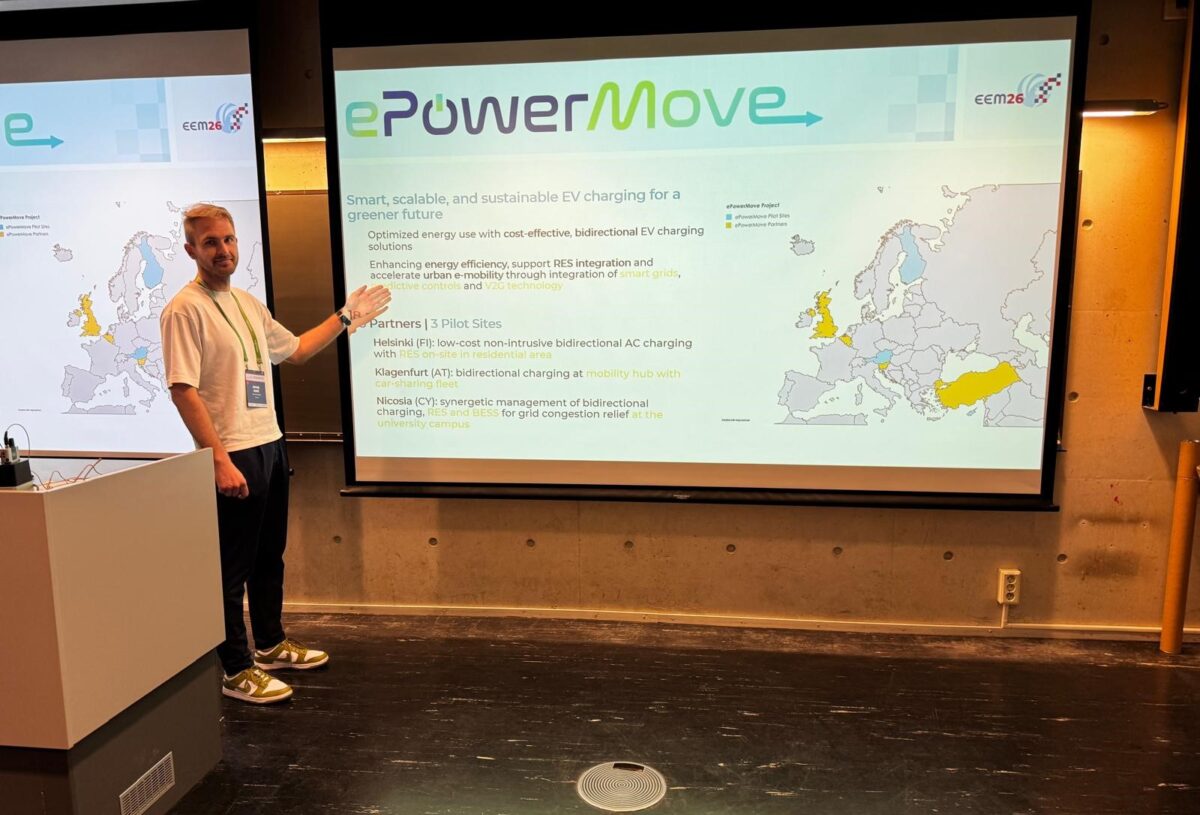
Jernej Jožič presented “Scalable Architectural Framework for Interoperable and Secure Vehicle-to-Grid (V2G) Integration” (ePowerMove project) in the session “E-Mobility as a Flexibility Resource”. The research introduces a modular framework connecting electric vehicles, charging infrastructure, grid operators, aggregators, and energy markets, providing a scalable foundation for future V2G services and smarter integration of electric mobility into the power system.
Beyond sharing research, EEM26 was a valuable opportunity to exchange ideas, strengthen collaborations, and engage with researchers and industry experts from across Europe.